July 2026: Cycle-End Risks Coming In View: Wars Poised to Further Boost Inflation, Possible US Suez Moment and US AI Narrative Looks Stretched
Last month’s Treasury Talk column discussed.
– The over-stimulation of the US economy as a result of US authorities pulling all major policy levers (fiscal, monetary and bank de-regulation) simultaneously in H1 2026,
– The commodity shock emanating from the Strait of Hormuz’s continued closure,
– The 2-year Treasury note’s growing impatience with a Fed that appears late on inflation,
– The fracturing of trust in what “safe money” is, and how US sanctions enforcement is made easier by “decentralized” digital assets, including USD stablecoin.
In June, I noted for bank treasurers specifically, US financial conditions were loose and risked creating a false sense of security for banks. I stated that risks were compounding — and the window to position conservatively may be short.
Since June, both risks from geopolitical/inflation shocks and a potential end of the AI boom mean credit and US recession risks remain underpriced. Continued inventory draws and parabolic commodity prices increase recession risk beyond current market pricing. Rising pressure on the US AI narrative adds an additional layer of uncertainty and increases risks of a cycle end.
Rising geopolitical risks and inflation shocks
Since my last column until end of this week, financial markets repriced as though the US-Iran MOU definitively ended the Strait of Hormuz conflict. The mark-to-market of being long commodities and inflation was a bit of a pain trade (yes, I held on) which is now in the process of ending.
However, the unfortunate resumption of hostilities in the Strait of Hormuz really is not a surprise given virtually no overlap in US-Iranian positions on fundamental issues.
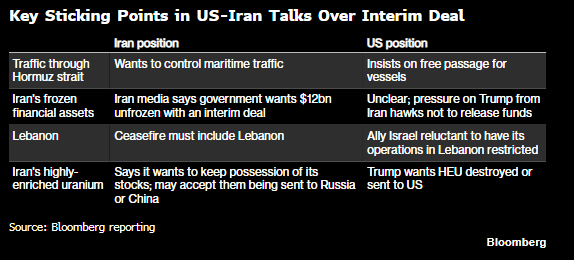
Also, both US and Iran were stating that they had won the conflict. Wars rarely can be described as both sides winning. Indeed, the main winner of the US-Iran conflict is not even a direct party to it – that winner is China who is gaining influence in the region and globally and is relatively insulated from the near-term fallout due to its large commodity stockpiles.

The Trump Administration now appears to be coming full circle on“escalate to de-escalate strategy.” Recall that going into Iran in the spring the Administration’s narrative was that this conflict reportedly would last just a few weeks.
Five months later the conflict with Iran is reaccelerating and its scope –see Iran’s strikes on Jordan and US strikes throughout Iran this weekend — appears to be expanding. Iran has an ally in the Houthis in Yemen. They have threatened to collaborate to close shipping in the Bab el-Mandeb Strait near Yemen through which other Gulf states have redirected some exports.
So where does that leave US Gulf allies and the safe passage of commodities that are key to the global economy through the Strait of Hormuz?
· Countries in the region – Saudi Arabia, UAE, Qatar, Oman, Bahrain — with their US dollar pegs may feel uncomfortable about the implications of possible Fed tightening even as real shocks from the widening conflict continue to hit their economies and markets.
· The world again is contemplating the risks of potential destruction of key energy and other infrastructure in the Gulf region and the sustained economic and humanitarian implications if such developments occur.
· The Strait of Hormuz increasingly is at risk of becoming a Suez Canal type moment for the U.S. China’s sphere of influence is expanding in the Gulf region and globally and it would not surprise me for them to facilitate peace in the region in a few months.
Given geopolitical developments, I have been thinking quite a bit about how the UK transitioned away from being a global hegemon and reserve currency and what perhaps can be learned from the UK’s experience.
Recall that in 1956, the UK, France and Israel became embroiled in the Suez Canal crisis with Egypt. One of the key objectives was to improve Israel’s security. Ultimately, despite an initial military victory over Egypt, the UK, Israel and France were unable to retain control of the Suez Canal.
Prior to the Suez crisis, Britain enjoyed significant influence in the Middle East, but the conflict had a long-term negative impact on UK influence in the Middle East. Afterward British firms faced hostility and greater uncertainty when operating in the region.
The combination of fiscal pressure and high inflation associated with the conflict and elevated oil prices damaged the government of then UK Prime Minister Eden. A new UK government was voted in and UK PM Macmillan implemented policies aimed at promoting economic growth through reindustrialization and investments in infrastructure and a reorientation of foreign policy priorities towards Europe/less global in its footprint. The Suez crisis marked a key step in Britian’s ongoing retrenchment after WWII from being a global hegemon and reserve currency.
Will the US mirror experience in Hormuz the UK experience in Suez? Time will tell.
It is interesting in this regard to look at IMF data on the US dollar share of foreign central bank reserves over time (white line).

· The 1979-1980 Iran revolution caused foreign central bank dollar holdings of USD to plummet when — akin to now — commodity prices skyrocketed and drained official sector holdings.
· 1990 is also notable as the US led coalition in the Gulf War to assist Kuwait and the collapse of the Soviet Union reinvigorated a sense of the US dollar’s primacy until the Dot.com collapse and China’s accession to WTO in 2000.
· As the current conflict with Iran extends, it is plausible to anticipate that suggest foreign central banks’ USD reserve holdings should continue to decline as they mobilize dollar balances to meet their population’s needs for critical but higher priced commodities, deepening the sense of a shift in global economic power.
And, unfortunately, the dogs of war in Russia-Ukraine’s multi-year conflict now are fully off-leash. Ukraine’s success strikes on Russia means that Russia is no longer the world’s gas station. Russia has initiated a refined product export ban until the end of July with almost 50% of Russia’s refining capacity off-line. In retaliation, this weekend Russia has launched the most significant attacks on Kyiv since the start of the war in 2022.
Ukraine is successfully targeting Russia’s oil and refining infrastructure with drones deep inside Russian territory as well as oil tankers transiting the Kerch Strait and Sea of Azov (note the unfortunate chokepoint similarity to the Strait of Hormuz).

Akin to the Strait of Hormuz, the Black Sea region has become uninsurable and increasingly unusable for shipping. Not only does oil and refined products transit here, but so does Russian and Ukrainian agricultural exports, including wheat. Russia is the world’s leading wheat exporter and Ukraine is a top global wheat exporter too. And this summer’s “super” El Nino also is resulting in excess heat and rain that may negatively impact wheat and other agricultural commodity production in other regions of the world.

While US oil prices for now remain more than 20% off their highs, price pressures on refined products are elevated and increasing. Combined, the Gulf states and Russia comprise ~17% of global oil refining capacity and bringing new refineries online takes years. Elevated gasoline and diesel prices feed directly into both global transportation and agricultural costs.
This detail is important. Macroeconomic forecasts banks may be using to consider the impact of higher energy prices may fail to account for the stress associated with the widening in spread between refined products and crude as most models are keyed to an oil price assumption. Prevailing diesel prices already are more akin to $120+ per barrel oil and inventories are declining rapidly.

Stated most simply, conflict and global commodity supply chain disruptions are widening sharply and these disruptions are inherently inflationary.
Large inflation shocks from commodities are not good for the economic outlook.
Such shocks tend to end up either:
· Getting passed on to the consumer and destroying demand elsewhere in the economy; or
· Reducing profit margins and resulting in a decline in asset valuations which have sustained upper income US consumer spending.
In H1 2026, US fiscal policy, as a result of the OBBBA tax rebates, provided some cushion to the US economy as the spring blockade of the Strait re-accelerated US inflation.
In H2 2026 there is no incremental fiscal stimulus to cushion the US economy through a potentially widening geopolitical and commodity price shock.
Against this unfavorable backdrop, new Fed Chair Warsh in Congressional testimony stated last week that “inflation is a choice, we are committed to 2% goal.” Those words could prove awkward and difficult to deliver on. Perhaps methodology changes coming from the US Commerce Dept which would tend to lower PCE, the Fed’s preferred inflation measure, are intended to help a bit on meeting the Fed’s target but changing the calculation doesn’t forestall the shock to demand or profit margins from elevated inflation.
A Taylor rule set to the FOMC’s June 2026 Summary of Economic Projections (SEP) median parameters for the real neutral rate of interest, or r*, and NAIRU suggest the gap between current Fed policy and a Taylor rule has widened to 150 bps since my June column.

This deterioration is due to the rise in the most recent core PCE reading (see below) where the rise in service inflation (medical care, housing and insurance) more than offset some moderation in good prices while the US-Iran MOU appeared to hold.

Unless the world suddenly becomes significantly more tranquil that gap will widen further as good prices reaccelerate due to Iran and Russia-Ukraine conflict impacts.
Further increases in US inflation coupled with limited US labor market weakening would increase the gap between the current level of the Fed funds rate and the FOMC guided Taylor rule estimate for where the Fed funds rate should be to meet the FOMC’s dual mandate as shown in the Taylor rule outlook matrix below.
Recall in looking at the matrix below that the current upper bound of the Fed funds target is 3.75% and would only be appropriate in very few outcomes shown in the matrix.

To complicate the policy outlook further, some market observers have questioned whether the 2.50% real yield of 5yr 5yr forward TIPS may be a more appropriate benchmark for the neutral real US rate vs the FOMC’s assumed 1.1%. Note that the FOMC has revised up its assumptions for r* multiple times since the pandemic and I anticipate that trend to continue.
Assuming the neutral real rate of interest is higher – 2.50% — results in the current level of the Fed funds rate being even more offsides relative to where it should be to meet the Fed’s dual mandate.

This alternative/higher r* specification produces an even more concerning Taylor rule outlook matrix because in no case would a 3.75% upper bound for the Fed funds rate be appropriate.

US financial conditions continue to signal overly accommodative policy
Highly accommodative US financial conditions support the policy over-stimulation thesis (higher number = easier conditions; most accommodative reading: January 2026, just prior to the Iran conflict – truly…what was Chair Powell thinking?).

Market-based US inflation expectations have narrowed further since June. Is the TIPS market taking Chair Warsh at his word on raising rates/lowering inflation or just slow to reprice in summer?

At the same time, Fed fund futures do not have a meaningful probability of a 25-bps Fed rate hike priced in until the Sept meeting and so far the policy sensitive 2-year Treasury yield (not pictured) has not risen materially further since June.

So, will Chair Warsh and the FOMC surprise markets in July?
Old habits die hard and so I suspect not. Rather, I would look for Warsh to outline his policy views during his speech at Jackson Hole in August and a first Fed rate hike to come at the Sept FOMC meeting. But remember that a late FOMC produces the need for policy catch up; a central bank getting behind the curve results in rapid monetary policy tightening and accidents.
US AI Narrative Looks Stretched as Q4 Approaches
Calling the timing of a credit bubble bursting (recall how loose US financial conditions are) is notoriously difficult – yet let me share a few points and charts that give me cause to pause in July about whether we are nearing that moment and have me increasing my cash balances.
· Extended US equity valuations vs US real interest rates – note 1999 and 2000 period and narrowing gap now. Stated simply, further repricing of long-dated yields higher may undermine US equity/AI valuations.

· US AI cost of compute is both data center and energy intensive and therefore expensive (chart credit Wen Li, BlackRock). News of Chinese startup Moonshot AI releasing a new version of its open source model, Kimi K3 underscores the risks of a viable and more cost-effective AI model to US firms. The chart also shows that AI models are a crowded space in need of consolidation which implies excess investment in the sector.

· South Korea’s new central bank governor Shin appears eager to reduce speculative excess and raised Bank of Korea’s policy rate by 25 bps at its July meeting and flagged further rate hikes in the pipeline. Korean equities have outperformed due to linkages to chip makers. BOK’s current policy rate is negative/below current levels of South Korean inflation and appears on a path to be reduce speculative excess. The high correlation between the KOSPI and NASDAQ suggests US tech shares could weaken further.

· OpenAI is the weakest credit in the US AI ecosphere. SoftBank is OpenAI’s traded proxy and SoftBank shares are under meaningful pressure. We learned last week that OpenAI is now being sued by Apple allegedly for stealing Apple trade secrets. This news further extends other negative coverage — see Karen Hao’s Empire of AI and Roan Farrow article in the Atlantic — on weaknesses in OpenAI’s business ethics and overall integrity.

What does all of this mean for bank treasury teams?
The overarching message for bank treasurers remains largely the same from June:
US financial conditions are loose, but the risks are compounding.
A late Fed, global commodity shocks, and rapidly spreading cracks in the US AI narrative reward early positioning punishes complacency
Bank treasurers also typically are used to managing one macro regime at a time. The current environment may present an unusually difficult combination:
· Inflation is above target and rising
· The US labor market is stronger than expected due to excessive stimulus
· A Fed that looks to be behind the curve and transitioning leadership with an uncertain reaction function
· US financial conditions that are loose currently, but may tighten abruptly
· There is a global commodity price shock with no clear resolution timeline that increases recession risk.
The standard playbook of “wait for Fed guidance and position accordingly” is inadequate when the Fed itself appears poorly positioned.
Suggestions for bank treasury teams remain:
– Increase the frequency of ALCO meetings to monthly from quarterly if you haven’t already done so.
– Work towards a more integrated/less siloed view of your bank’s asset liability management. While regulators encourage thinking of financial risks in neat little buckets, in practice liquidity, funding, profitability, and credit are all highly inter-related in bank ALM. Have more integrative discussions, meetings and analysis across different areas of your bank’s ALM functions.
– Stress test for three Fed rate hikes by year-end and a 6% 10-year Treasury yield (which is consistent with the prevailing 10-year/10-year forward Treasury rate); review fixed asset duration.
– US banks’ CRE balances are starting to grow as pressure related to the rise in long-term Treasury yields grows. Banks should carefully assess their CRE underwriting capacity and risk appetite.
– Banks should stress test also for a second phase to the Strait’s closure with Treasury curve flattening or even inversion if recession risks rise.
– Recession risks may be underpriced, making it an opportune time to reduce higher risk credit exposures through asset sales or securitizations.
– Evaluate the implications of an increase in recession probability for your CECL.
– US rate vol seems too low; avoid agency MBS exposures until rate volatility rises meaningfully; evaluate pricing of interest rate caps and floors.
– Develop market scenarios for interest rate and funding risk with triggers with your board that result in management action.
– Strengthen your bank’s term on-balance sheet liquidity. Further spikes in commodity prices can be anticipated to produce dollar shortfalls in the global financial system.
Last week I was interviewed by the Financial Times on my views on the Fed’s balance sheet (relevant as Chair Warsh has created a taskforce on this issue) and what it means for US banks. My thanks to Robert Armstrong for the discussion. You can read the interview here.
I look forward to speaking at the Concentrate CRE US banking conference Sept 14-16 – perhaps I will see a few readers there!
My sincere thanks to my university and BTRM students and Treasury Talk readers and I wish you a good summer and hope that you are building up your resilience for what may be a turbulent fall.
Jill Cetina, CFA is Executive Professor of Finance at the Mays Business School, Texas A&M University, BTRM North America director and a former Associate Managing Director at Moody’s and former Federal Reserve officer. The views expressed here are her own.
This piece was completed on the evening of Sunday, July 19, 2026. The Strait of Hormuz situation remains fluid. Readers should treat specific probability estimates and market pricing referenced throughout as indicative of the environment at time of writing.